

Thank you to everyone who joined our recent Care Opinion workshop: Showing Impact Through Responding on Wednesday, 3rd December! Below you’ll find a roundup of what we covered, the recording, slides and some additional resources that we hope you’ll find useful to keep on hand.
Our goal was clear: to transform the way we respond to Care Opinion stories. Not just to reply, but to truly connect with authors, listen intently, and leave a lasting impression through our responses.
We focused on the areas responders tell us they struggle with most, and the things authors often say don’t land well. By shining a light on these challenges, we hope to turn barriers into opportunities for better communication and stronger relationships.
This workshop wasn’t just theory - it was about real conversations, real challenges, and real situations that many of you face regularly as Care Opinion responders. With this in mind, we explored what transforms a response from good to great.
Through practical examples, we discovered how small changes can make a big difference - turning generic replies into personalised, compassionate messages that truly resonate. It’s about finding the human touch in every response and learning how to make authors feel heard, valued, and understood.
What we covered:
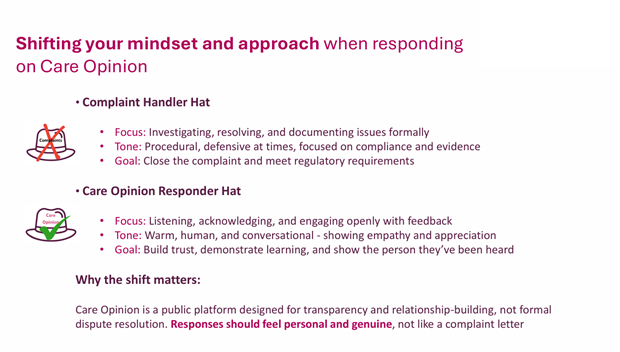
We began by asking: What’s the difference between responding to Care Opinion stories and formal complaints? Is there one? It’s a question that matters because understanding the differences helps us shape how we respond. From there, we moved onto tone - how a generic response can feel cold, while a conversational approach builds trust and warmth.
Then came the turning point: Going one step further. We talked about coordinating responses with colleagues and weaving in organisational values to make every message meaningful. It’s not just about responding - it’s about representing who you are as a person and an organisation, something you have the flexibility to do when responding to Care Opinion stories!
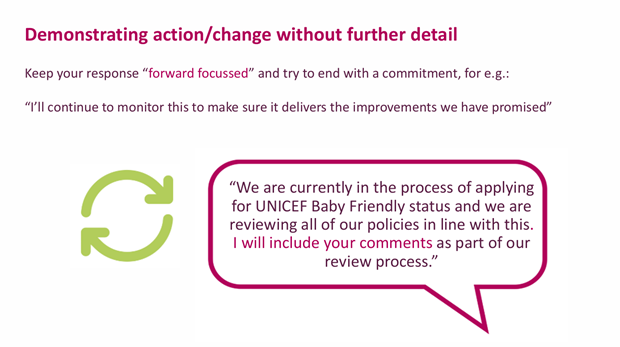
We then turned our attention to some common patterns in responses - those subtle habits that can quietly stand in the way of learning and change. One example? Asking yourself, “Do I really need more detail from this author?” Sometimes the answer is yes, but more often, it’s no.
Through real examples and recent research, we unpacked why this matters and explored how to avoid falling into the trap of becoming a defensive responder. When feedback feels tough, it’s natural to slip into defence mode - often without even realising it. Recognising this tendency is the first step toward crafting responses that are open, constructive, and genuinely committed to improvement.
The most powerful takeaway? The value of truly listening. When we respond with empathy and a genuine commitment to learn, feedback stops being a task and instead becomes an opportunity.
Workshop Resources:
Workshop slides: Dec 2025 - Responding workshop presentation slides.pdf
Workshop recording:
Research chat recording:
👇Missed this workshop? No problem! We have a range of upcoming webinars and workshops on many different Care Opinion topics – explore the options and register your place!
Training, workshops and tailored support | Care Opinion
Workshop: Showing impact through responding
Workshop: Showing impact through responding https://www.careopinion.org.uk/resources/blog-resources/1-images/cfca1bae3e18467b843315b7294377ad.png Care Opinion 0114 281 6256 https://www.careopinion.org.uk /content/uk/logos/co-header-logo-2020-default.pngUpdate from Care Opinion
Posted by Danielle McEwan, Senior Engagement & Support Officer, Care Opinion, on
Thanks for your feedback.